


Who hasn’t retreated in some way over the last eighteen months in one way or another? We’ve had to retreat into our homes, gardens, home offices and green spaces in order to survive the interminable lockdowns and restrictive measures put in place by governments to contain a deadly virus.
We’ve considered ourselves fortunate if we can spend time outdoors in nature and parks, if we’ve a garden and there’s been a corresponding migration from cities to the country.
Yesterday I did the reverse and took a day – cation in an urban landscape that moved me back into a city –scape familiar and also missed over the last year and half. Although, particularly with the holiday season being upon us the centre of the place I visited was not itself but a shadowland of what it usually is I was happy to tread familiar streets in search of some culture.
And I found it, even though waiting for a door to be unlocked for a personal slot to enter a gallery space usually teeming with faces air thick with voices and laughter was a sobering reminder of what we’ve been fighting for. It was also enjoyable to get the rare opportunity to explore a gallery with privacy and away from crowds jostling and blocking views.
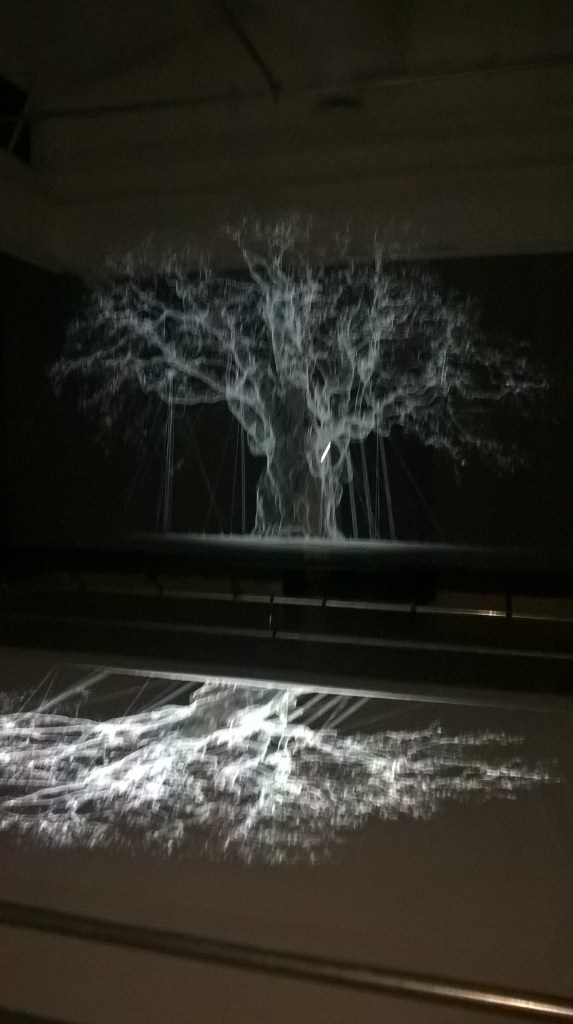
Nottingham – born YBA (young British artist) Matt Collishaw integrates past techniques used to display movement and communication with today’s technologies to put our behaviour today into an historic prospective at the D’janogly Gallery.
With a nod to the nostalgia prevalent in post – Brexit Britain Collishaw sets his installations in this context while showing them as firmly of the past. Major Oak from near – by Sherwood Forest is from an old Victorian device used in theatre to create ghostly spectres called Peppers Ghost updated with the use of lasers to give the majestic oak a reflective presence surmised by its name Albion.
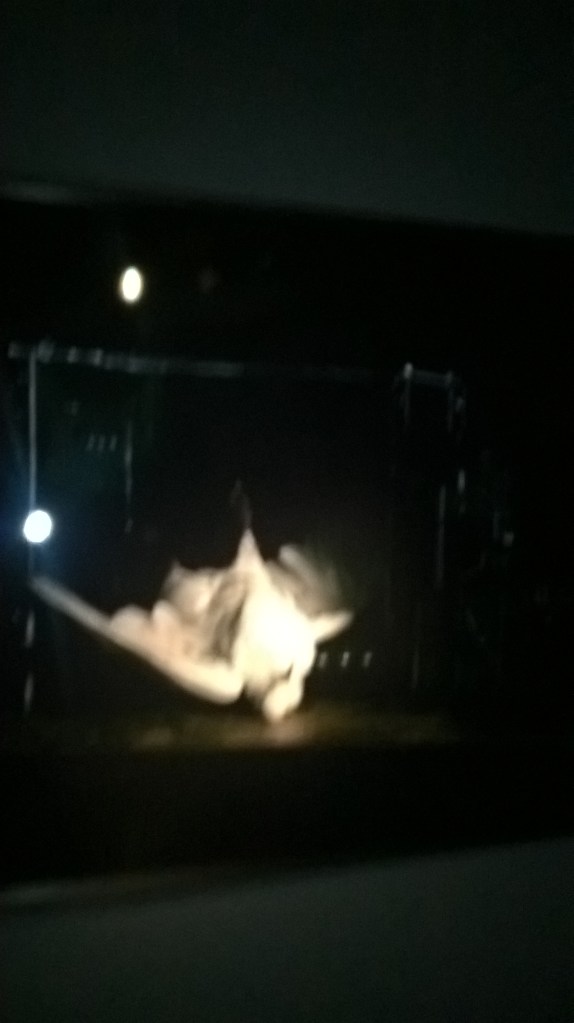
Looking back to days long – gone is a familiar theme of the show like the Centrifugal Soul. Once again based on a Victorian optical illusion it’s a spinning drum that creates the impression of movement called the Zoetrope.
Many will remember similar games played at school with individual sketches of a horse that shown quickly together moves into a gallop while this device applies 3D forms brought to life by strobes. The rotating display initiates interplay between natural symbols attracting each other for propagation and survival. Flowers open their fluorescent petals and stick out stamen to pull in the birds of paradise such as the humming bird. It’s a vivid movement of attraction and fertility Collishaw implies is the driving force of much of today’s communication like social media. The constant presentation of ourselves at what we consider our most attractive to reach others is an obsession keeping us all transfixed with how we’re thought of.
It’s brought to a timely close in an extension of this theme of satisfying others with a series of metal robotic birds encased in metal cages that peck away at feeders based on psychologist Skinner’s theory of conditioning.
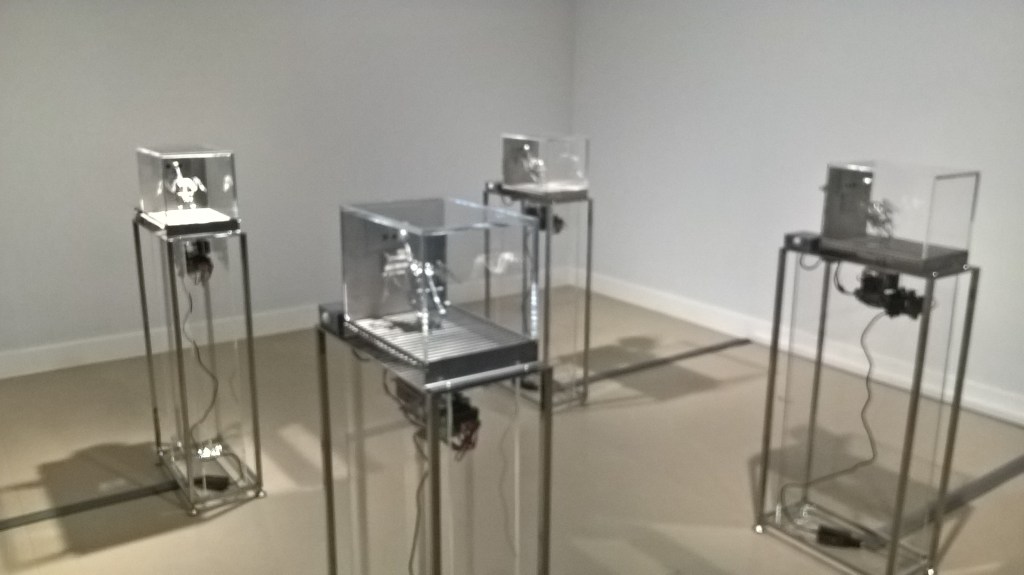
Skinner’s experiment on animals show the participants respond to reward by repeating behaviour that caused it and the more random the rewards the more they repeat the behaviour in the hope of gain. So when we all tap away at our ‘like’ buttons, or compulsively express views on Twitter in the belief it’ll make us more popular we, like the robotic birds respond to the crumbs of reward the social media and hi – tec giants throw our way to keep us using their technology.
And Collishaw seems to imply with the finishing photographs based on Dutch painter Jan Asselijn’s The Threatened Swan we behave in such prescribed ways at our peril. Or I think he implies: “We’re for the birds”.
 Charnwood News
Leave a comment