


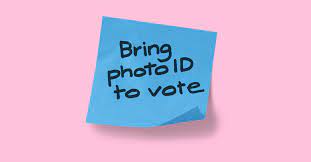
For the first time registered voters must bring photo ID to the polling booth to cast their vote at the forthcoming local elections on May 4.
Elections are being held in Charnwood for the borough council as well as some town and parish councils. However, during a pilot in 2019, the number of people prevented from voting in one day due to the requirement for voter ID was more than four times the country-wide number that had been accused of voter fraud by impersonation since 2010.
Instances of voter fraud in the UK are very rare. In elections between 2010 and 2018, across the whole of the UK, just 181 people were accused of impersonating another individual at the polling station, according to Electoral Commission data. No further action was taken in most cases. Only two people were convicted of voter impersonation at a polling station in Derby.
The need to show photo ID became law in mid – January this year and the Electoral Commission only published guidance for returning officers who oversee overseeing elections in February.
To vote an acceptable form of ID must be presented before a ballot paper is given. Accepted forms of ID include a UK, European Economic Area (EEA) or Commonwealth passport; a UK or EEA drivers’ licence; and some concessionary travel passes, such as an older person’s bus pass or an Oyster 60+ card. Voters will be able to use expired ID if they are still recognisable from the photo.
Residents without one of the suitable forms of ID will be able to apply for free ID called a Voter Authority Certificate which can only be used for elections. Applications can be made online through the gov.uk website or by completing a paper form.
A paper form is available to download and print from the Charnwood Borough Council website.
However the move has been mired in controversy and police are being put on standby should tempers flare.
Opponents warn that it will put people from certain demographics – who are less likely to have photo ID or apply for a voter authority certificate – off voting. These groups, identified by the Electoral Commission, include the over-85s, trans and non-binary people, disabled people, ethnicities with low ID ownership, and homeless people.
As early as 11 July 2022, during the passage of the voter ID bill, election management companies were warned in a private letter from the Association of Electoral Administrators “we no longer believe it is possible to safely and successfully introduce Voter ID in May 2023… There is now insufficient time and resource to deliver such a technical change to the standard voters deserve.”
Still the move went ahead to according to the government: “protect our democracy”.
 Charnwood News
Leave a comment