


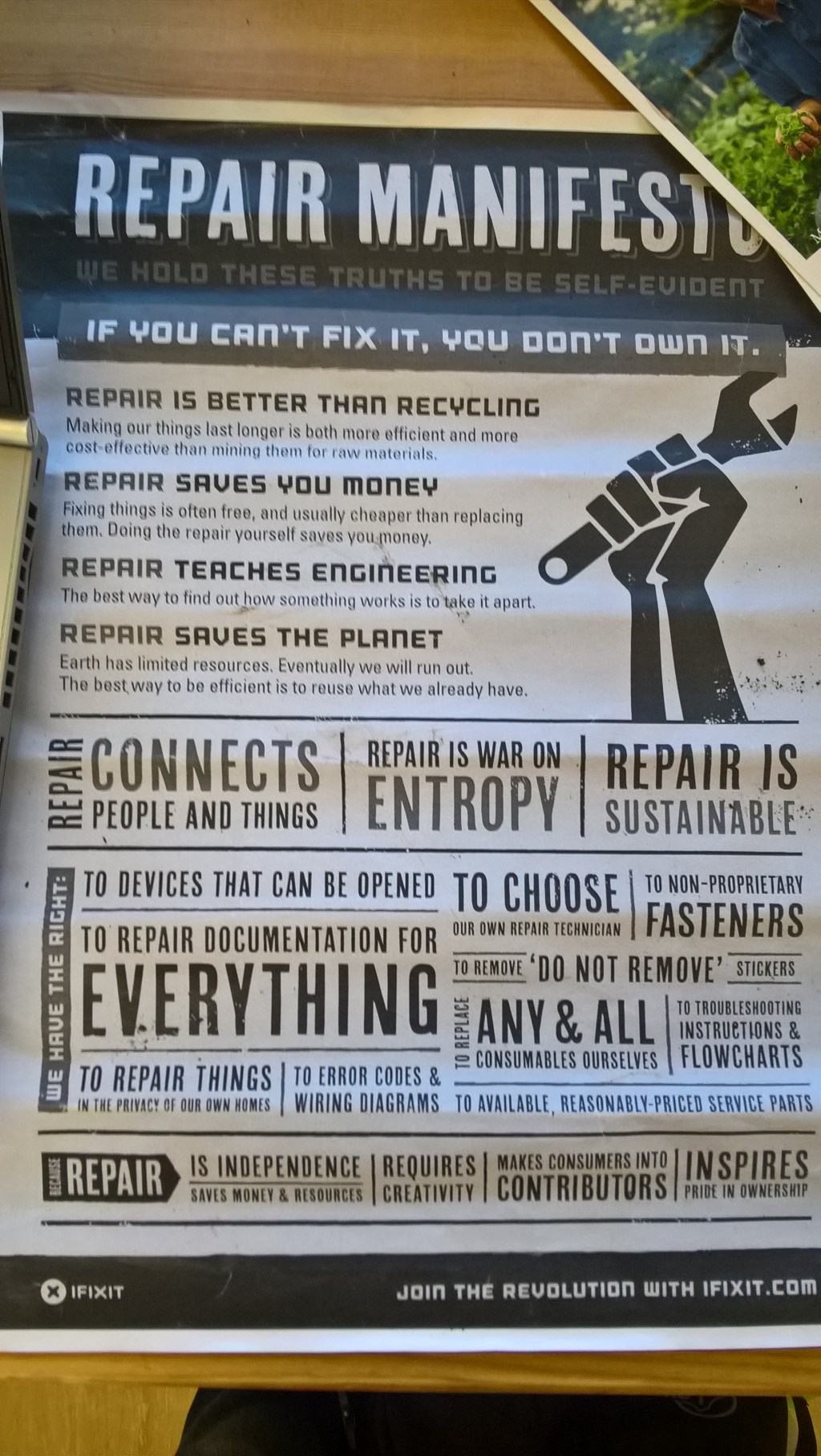
TODAY at an event designed to encourage re – using all kinds of items by repairing them I was struck by the idea of “if you can’t fix something you don’t own it”.
I can see the meaning behind this idea: this year my eight – year – old HP laptop kept grinding to a halt online. It’s of sufficient spec for me to loathe the thought the only option is to tip it and oh yes buy a new one.
Despite asking tech engineers from top–flight firms how I could fix it I got no workable solution. Except, that is, from my local hometown, home – based independent techie guy who immediately suggested a simple Windows re – install and now my laptop is as new. Only £40!

This seemingly obvious remedy was not offered to me by any high – street support outlet but now I have a closer sense of ownership of my laptop and I feel less under the relentless pressure to consume. I’m more confident I own it now than ever.
The fix – it movement has a repair manifesto. They believe the right to repair should be enshrined in law.
The emphasis isn’t on recycling that still involves mining for resources but fixing. As they say “would you buy a car if you couldn’t replace the tyres?” but we buy phones we can’t get new batteries for all the time.
The movement is lobbying for increased access to parts and tools, manuals and diagnostics manufacturers use and software to reset security locks and pair parts.
Here’s what they advocate: “When manufacturers don’t make parts and tools available, they create repair monopolies and hurt small businesses. (6 per cent of independent repair shops we surveyed have to turn customers away because of repair restrictions. If the Right to Repair is not protected in law, their businesses will suffer. Manufacturers at their own service centers can push you to buy new instead of repairing. They can set prices wherever they like. And they can shred reusable devices instead of recycling them. Having to compete with independent shops keeps manufacturers honest”.
 Charnwood News
Leave a comment