


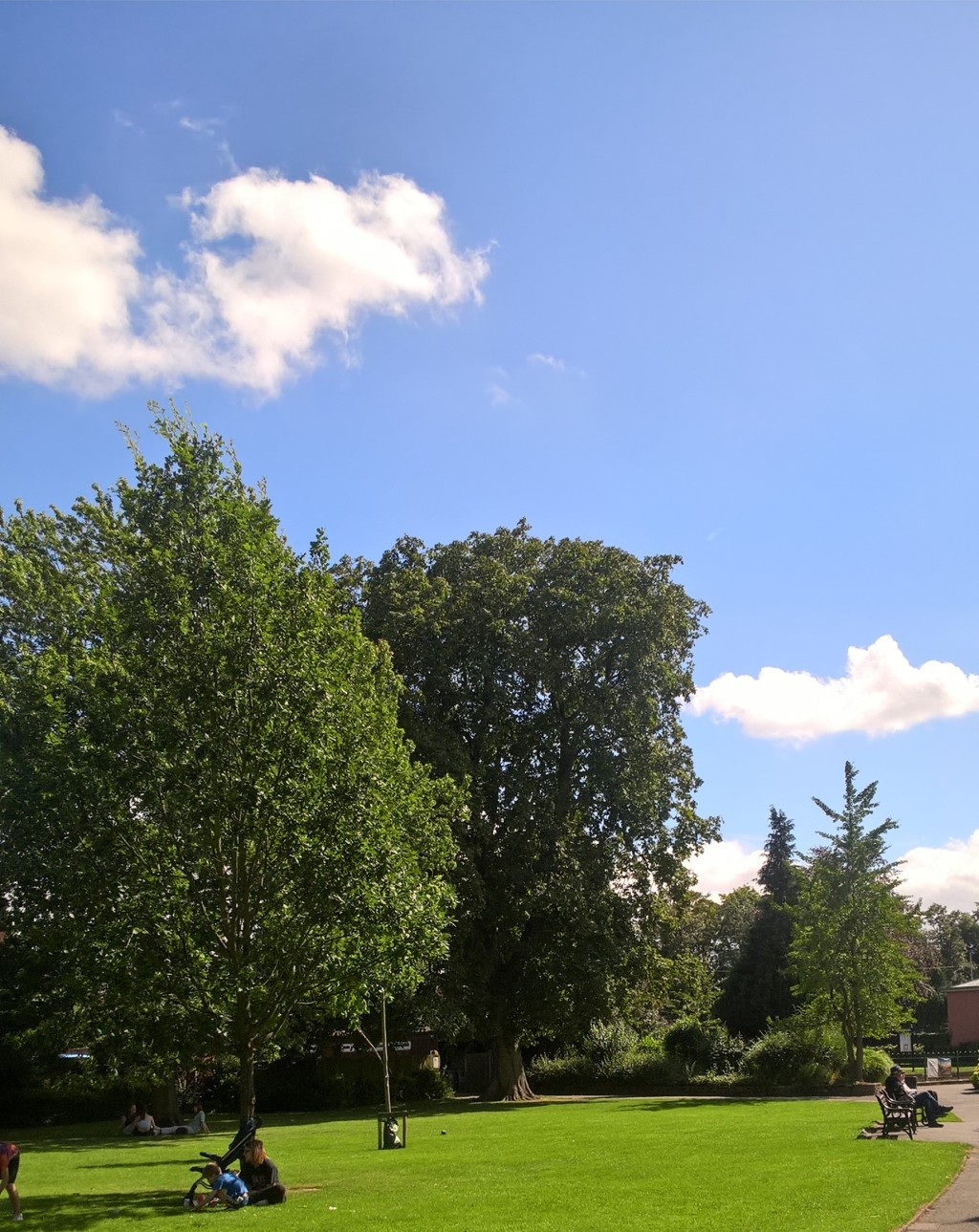
FUTURE tree – planting at a historic central park has been cast into doubt following the failure of a memorial tree to successfully establish.
Recently planted to commemorate a rugby player at Queen’s Park in Loughborough, the sapling died for no apparent reason and a second planting isn’t thriving, causing concern for the prospects of further tree planting in the park.
Manager of Queen’s Park for outdoor space contractor to Charnwood Borough Council ID Verde Martin Botham confirmed: “The oak sapling has died.”
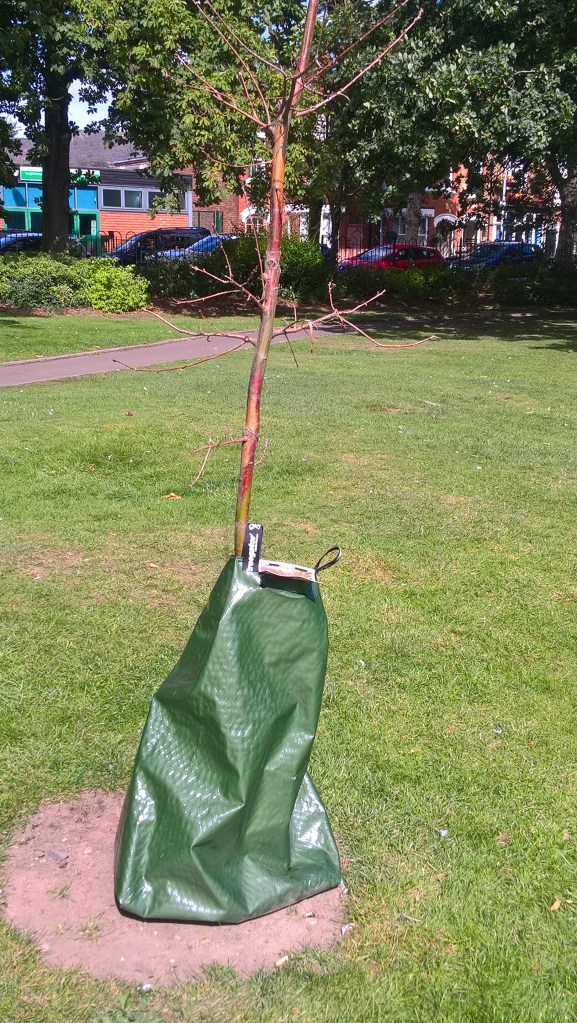
Why the young tree is not establishing is so far unclear but is thought to be a combination of the uneven lie of the land causing water to run off and record high temperatures in June.
A gardener for Charnwood Borough Council’s outdoor management contractor ID Verde said no one knows why the new tree isn’t rooting and thinks it’s because it’s not getting enough hydration.
A planning application proposed in 2010 to fell five trees went through and in 2016 it was decided not to implement a tree protection order (TPO) for the urban space opened to celebrate Queen Victoria’s diamond jubilee in 1899.
The jewel in the town’s crown is a conservation area but some of the several hundred – year- old trees may be unsafe or unhealthy and the authorised programme of work has started.
Work planned includes the felling or pollarding (topping) of several horse chestnuts, alders and limes.
The groundsman said several established trees may come down and that it’s a question of balancing risk to public safety with conservation.
“Some of the pollarding to remove dead branches so far has kept the public safe,” said the worker who described himself as a tree – hugger.
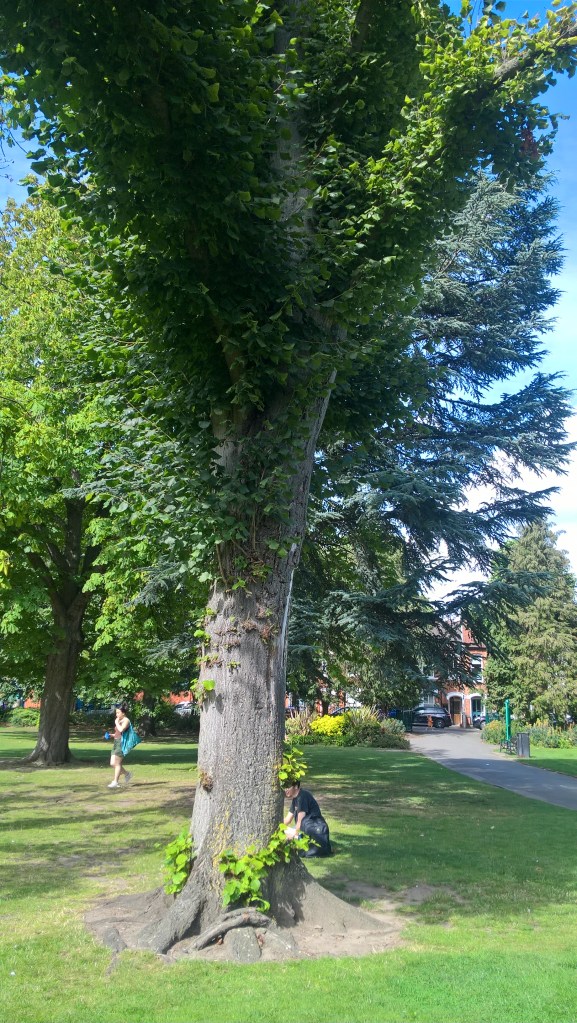
“If a tree starts to lose its bark it’s a sure sign it will die but taking the tops off some, as with one of the lime, is proving to extend the life cycle.”
TPOs protect trees which may visually enhance the quality of the borough’s environment or trees which are a benefit to the community. The application in 2010 agreed the felling of three horse chestnuts and two alders. Some of the proposed programme of work went ahead and proved successful in maintaining and extending the life of some including reducing the crown of a lime that was losing its bark, a clear indication it would die.
“Ancient trees in towns and cities are vital for the health of nature, people and planet,” said Naomi Tilley, lead campaigner at the Woodland Trust.
“They give thousands of urban wildlife species essential life support, boost the UK’s biodiversity and
bring countless health and wellbeing benefits to communities.
“But most ancient trees aren’t protected by law, and those in urban areas are particularly vulnerable, she added.
 Charnwood News
Leave a comment