


Seeds with stories are being sought by a heritage seed library asking gardeners to save their rare or unusual heirloom varieties grown through generations in the hope of discovering new crops.
Garden Organic’s Heritage Seed Library is running a Sowing Your Seeds project funded by the National Lottery Heritage Fund to find seeds flourishing in the East Midlands with unique characteristics and background stories.
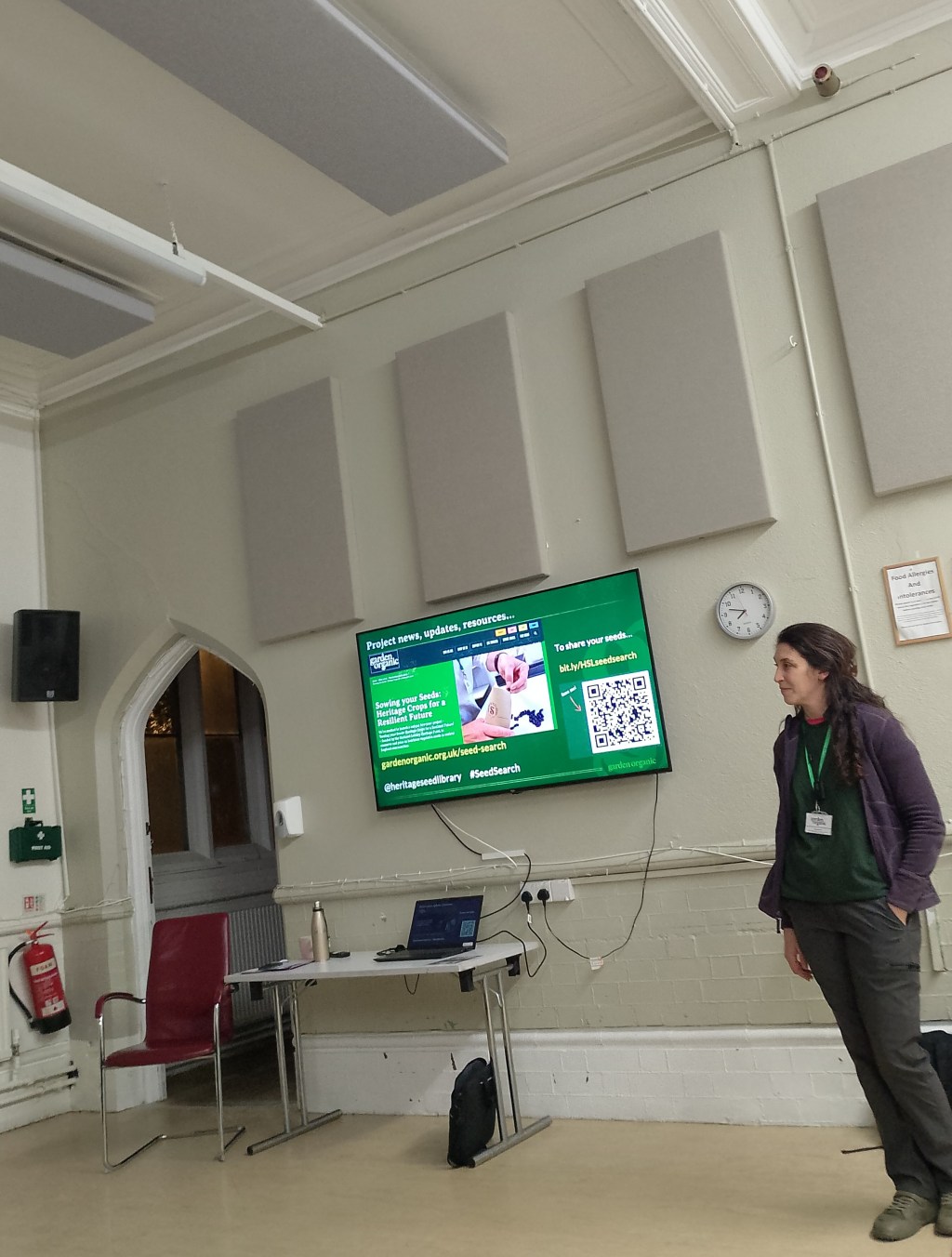
Project coordinator Gisela Derrick alongside Catrina Fenton of Garden Organic outlined how far the project has come at a talk at Fearon Hall, one of a programme of climate and nature talks organised by Incredible Edible Loughborough.
Head of the heritage seed library at Garden Organic Catrina Fenton said conserving heritage varieties, none commercially available so not already propagated by seed companies should preserve the essential characteristics that distinguish between locally – successful varieties.
Catrina said this matters because open pollinated plants have slight genetic alterations that can build more tolerance and adaptability to changing climate conditions.
“The seed savers are doing what people have been doing for thousands of years,” said Catrina.
“The project aims to rediscover and find little gems that are out there across the East Midlands,” she added.
Gisela Derrick told of Bernard Fearn who had been growing a purple flowered climbing French bean in Loughborough since WWII although it’s thought to have existed many years before and the sweet Brooksby tomato grown by family and friends and now at Brooksby Agriculture College since 1962.
Vasu’s 30-day dwarf Papri Lablab bean originated from an Indian commercial seed but now grows on the Redhill Allotments in Birstall.
Gisela said to date 38 varieties have been submitted and19 sown and trialed with 11 successful including purslane, broad beans and a red orach; developing into a type of dimorphic spinach producing two types of seed germinating in both spring and autumn so more adaptable to the changing climate.
“The project covers Lincolnshire across to Herefordshire bordering Wales and we want to know if you have any unusual varieties that have adapted well,” said Gisela.
“We hope to discover four new crops,” she added.
Some of the other tales behind the donated seeds stem from afar before settling in the Midlands e.g. Uncle Maurice’s broad beans were given to a war veteran and then to his son who emigrated to Canada and passed through family to grow in Litchfield. Weller’s Blue Bean – named after the donor’s father who was given the seed by a soldier in 1946 in France during WW2. The Bumpsteed Black Runner Bean had to be tracked back to the roots of each plant to get one genetically consistent and then hand pollinated for a perfect solution.
 Charnwood News
Leave a comment