


FORAGING around campus today led to the discovery of a surprising amount of weird and wonderful fungi – some good enough to eat.
Isaac Chik, a student of industrial design at Loughborough University took a group of students from the landscaping and gardening society on a mushroom walk from the design school to the society garden showing how an amazing number of fungi growing under trees and on the verges can be found.
Isaac explained funghi has a very close symbiotic relationship with trees connecting through a network of mycelium thread which largely determines where each type of mushroom is found. For example, the orange grisette or Amanita crocea grows mainly with birch or beech but can be sometimes found with conifers and is an edible and quite sweet tasting mushroom.
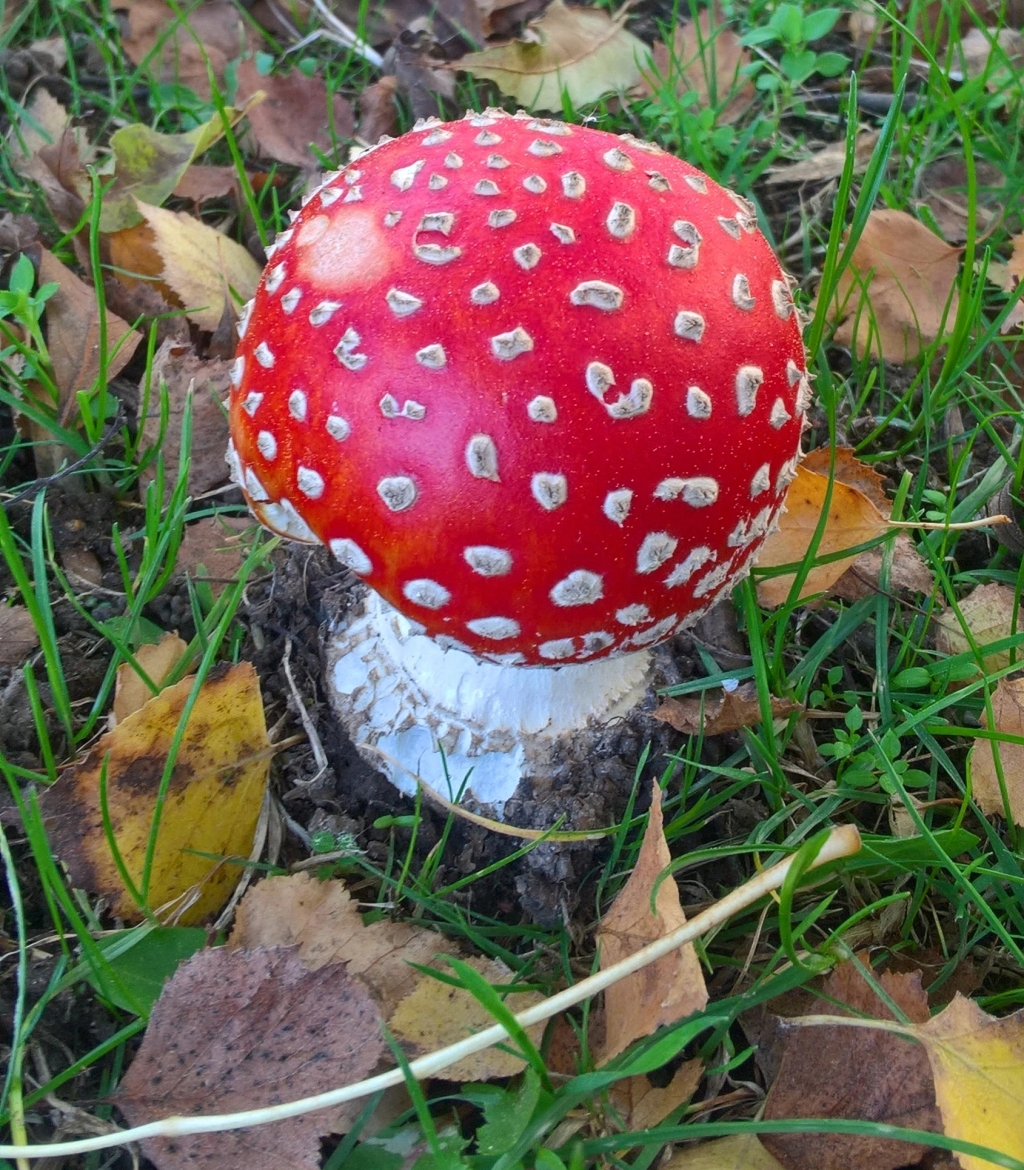
Fly agaric, Amanita muscaria, is particularly close to birch. Toxic but not deadly, it is one of the most recognisable of autumn mushrooms and can be found from late summer to the first frosts of winter. Spotting the bright red caps peeking up from the leaves was like being in a fairy tale. Its name comes from its historic use as natural pest control when fly-plagued countryside-dwellers would sprinkle chopped up chunks of the mushroom into a bowl of milk to form a tasty but deadly trap for insects. This mushroom also has hallucinogenic properties which the Lapps have used traditionally in ceremonies and even to round up reindeer who seem to love them. In the distant past it was frequently consumed in parts of Europe, Asia and North America after preparation. Scientific studies show that there are methods to efficiently remove the toxins and render it safe for consumption, which explains its use in the past.
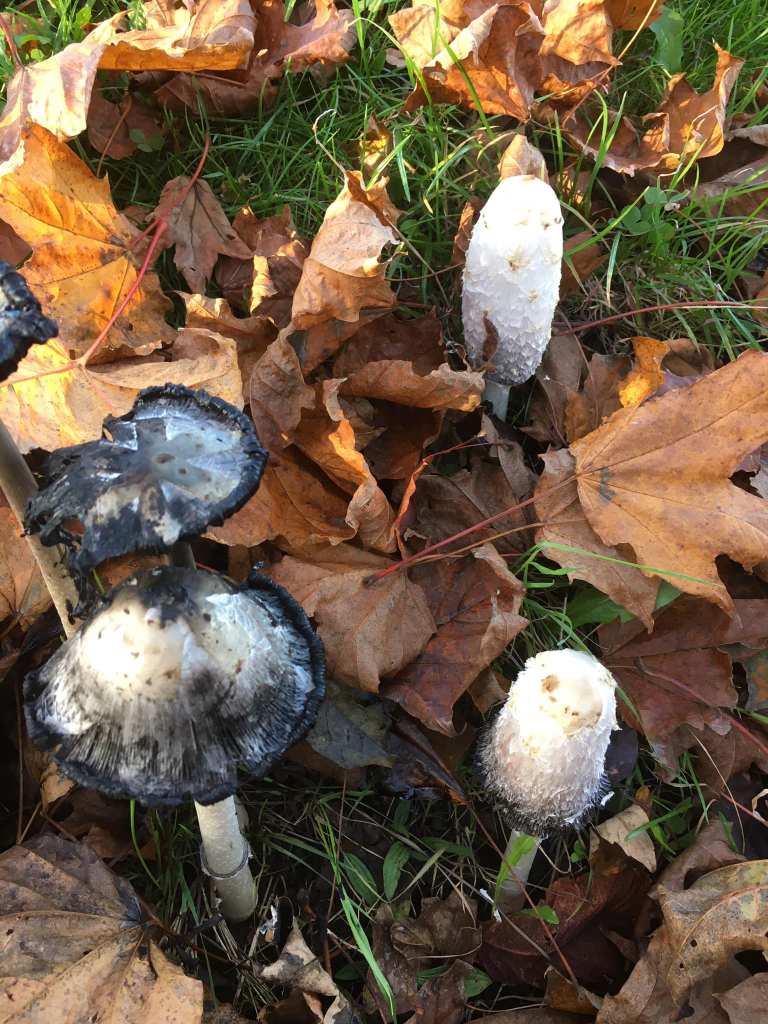
The shaggy inkcap or Coprinus comatus can be found in grass by the sides of roads, lawns, flower beds, grassland and recently disturbed soil. It grows individually or in large numbers. The long, shaggy cap of this fungus has earned it many nicknames, from ‘lawyer’s wig’ to ‘shaggy mane’.
The white scales on its cap give the appearance of a ruffled head of hair, although it looks a lot more mushroom-like close – up. Shaggy inkcaps can be used to make ink although mushroom-based ink is a bit smellier than the stuff you get in your ballpoint pen, but Issac said it can also be a substitute in cooking inky squid
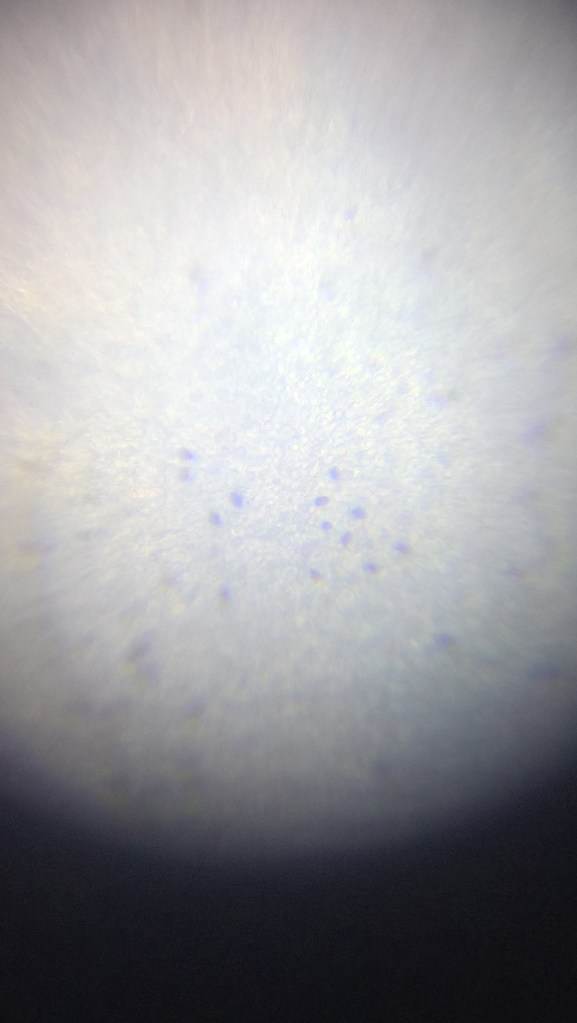
Yellow stainer – Agaricus xanthodermus is poisonous with alarming symptoms. It’s coned to a shallow convex and is quite easy to distinguish by how the cap bruises chrome yellow. The purple, brown spores were looked at under a microscope showing as ellipsoid to ovoid. Not one to try.
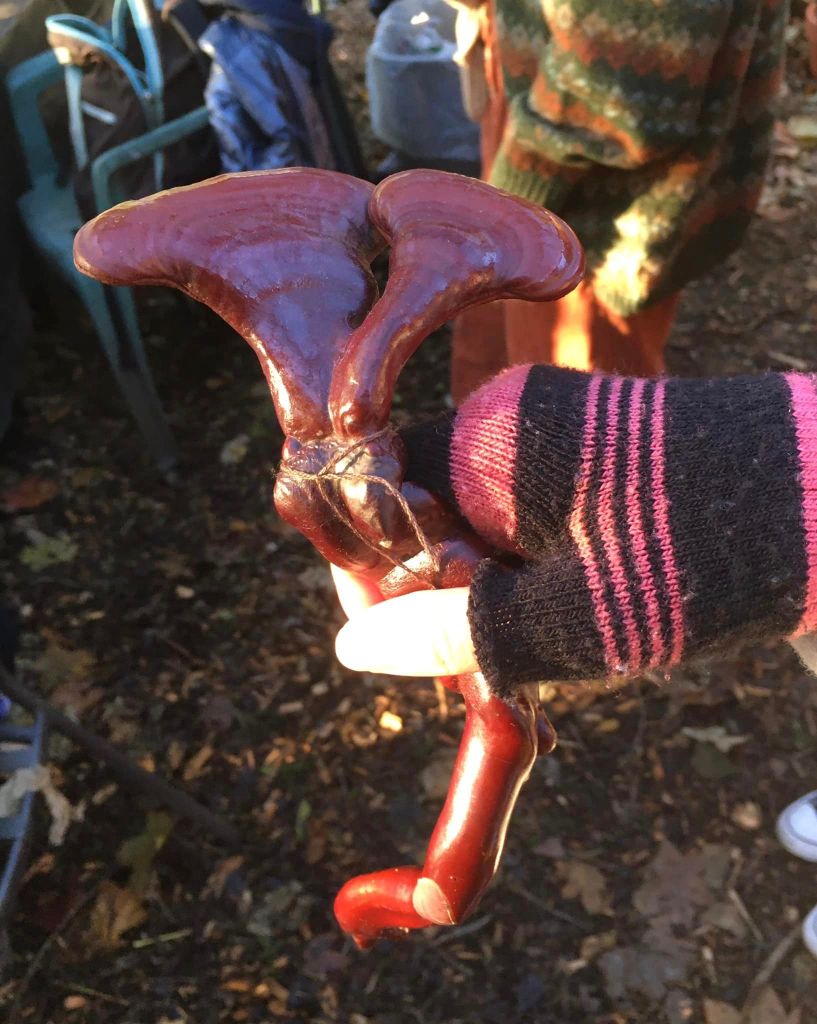
There were also samples of a wood – looking fungus Issac grew on his windowsill in London which he was surprised by as he didn’t think it warm enough, but it certainly took to its environment and has the appearance of solid mahogany.


Leave a comment